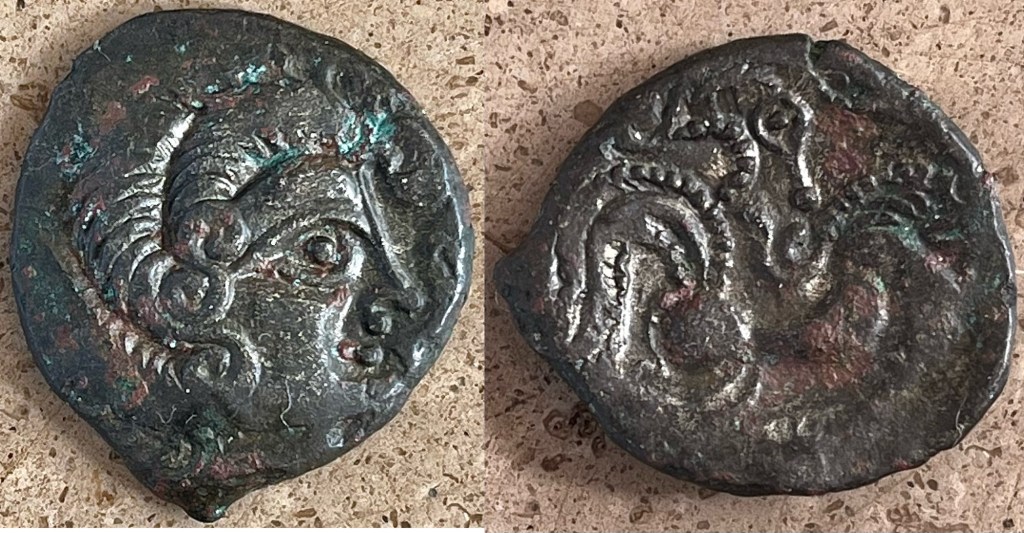
Billon Stater (c. 75-50 BC) (S16). Celtic Armorica .(Channel Islands and North-West Gaul). Type III Obverse: head with corded hair with anchor shaped nose. Reverse: stylised horse facing right with rider and Victory, lash ends in a loop, boar below. Grade aEF. Price AUS$800
Anglo Saxon
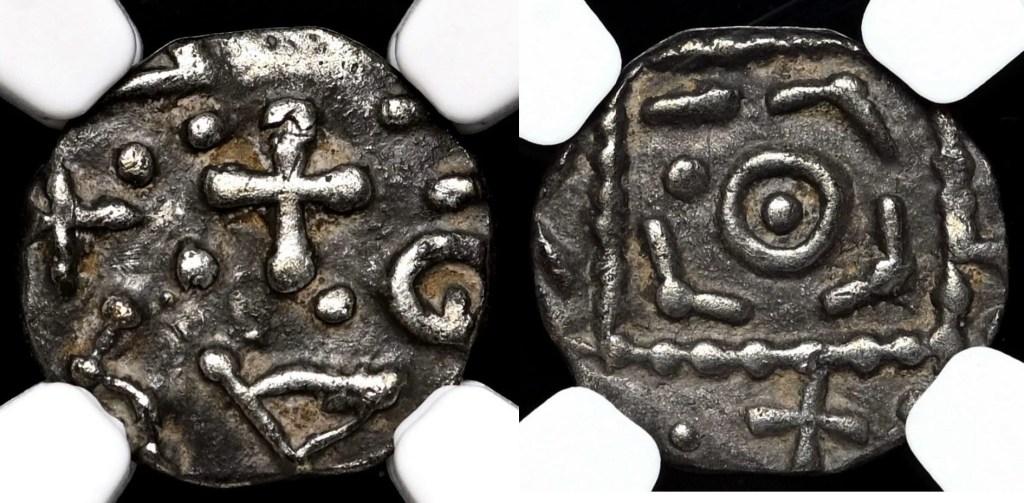
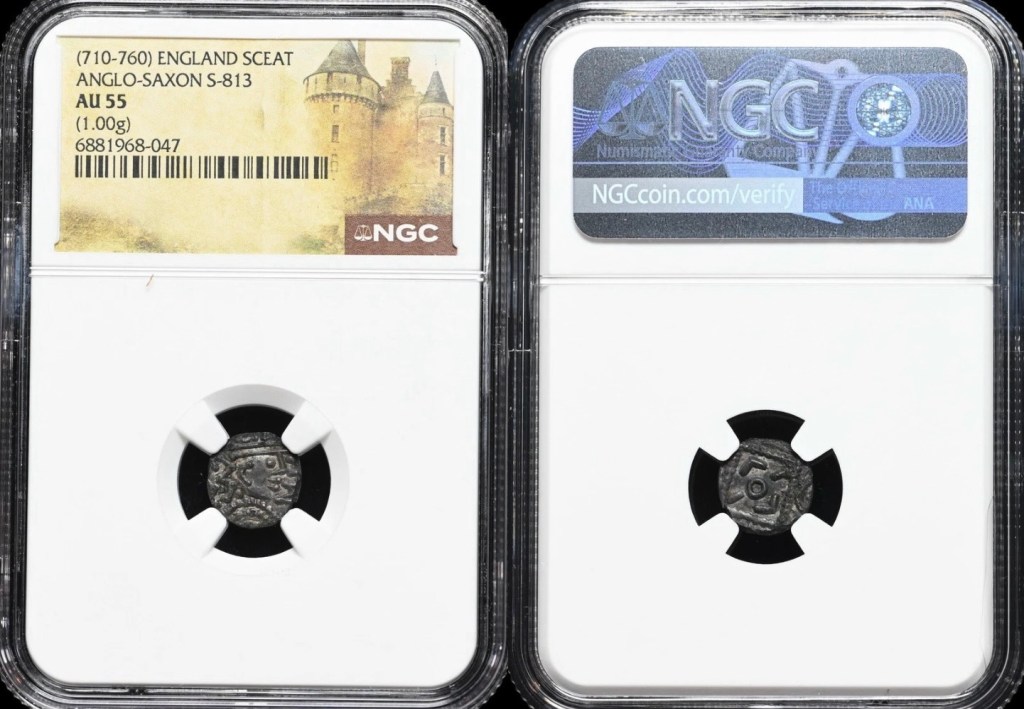
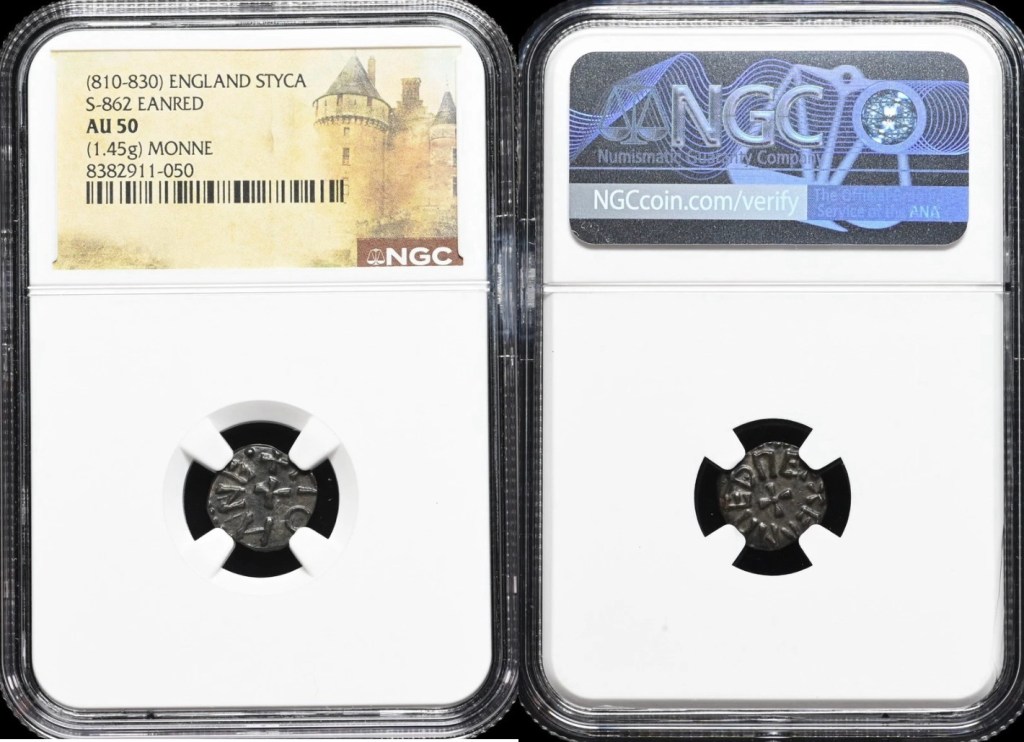
695-740 Anglo-Saxon silver Sceat (S793) Continental Issue. Obverse: highly stylised degenerate head often described as a porcupine design, representing a degraded portrait. Reverse: beaded square with central pellet in annulet with additional pellet and line and angles inside, representing a degraded Roman military standard. These early small thick coins were part of the transition from gold to silver currency. They were produced in the Netherlands or Frisia and circulated in Anglo Saxon England. A lovely example slabbed and graded by NGC. Grade XF45 (EF). Price AUS$735710-760 Anglo-Saxon silver sceatta (S813). Secondary Series R. Obverse: head without a neck and ‘C-shaped’ ear, possibly crowned and in royal regalia facing right, with symbols and small annulets to left and possibly runic inscription W for the moneyer Wigraed to right. Reverse: square standard with and large central annulet and diametrically opposite angles and lines inside. Fabulous head/portrait is a defining feature of this exciting coin. Slabbed and graded by NGC as aU55. Price AUS$2,600.810-830 Eanred Styca (S862) King of Northumbria. Obverse: lettering EANRED REX surrounding a cross central motif. Reverse: lettering MONNE surrounding central cross motif. After c 810 sceattas debased to a copper alloy called a Styca. This example is of superb quality and presentation. Slabbed and graded by NGC as aU50. Price AUS$1,300
 Rare Coins Australia